Your wedding gown carries memories that go far beyond one special day. Proper wedding gown storage protects that history and keeps the dress looking beautiful for decades. Many gowns are made with silk, lace, tulle, and intricate beadwork. These materials age quickly if stored improperly without preservation. Discoloration, fabric weakness, and permanent stains can appear over time without proper care.
Preserving a wedding gown is not only about fabric. It is about protecting emotions, traditions, and family stories. A well-preserved gown can be worn again, displayed, or passed down as a meaningful heirloom to future generations.
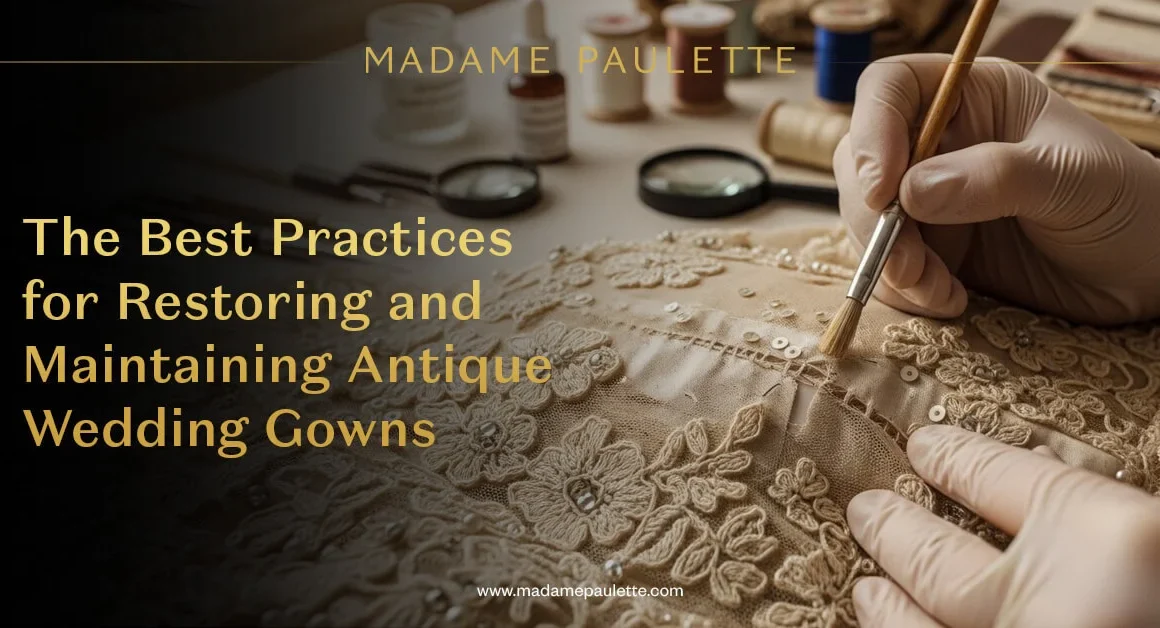
Experts agree that professional care plays a major role in long-term preservation. Madame Paulette’s experience and expertise as the world’s leading cleaning & restoration specialists have shaped industry standards for luxury garment care. From delicate lace to couture silk gowns, professional preservation methods help protect gowns from aging, damage, and environmental stress. Thoughtful wedding gown storage keeps your dress a timeless symbol of love and celebration.
Why Proper Storage Matters for Your Wedding Gown
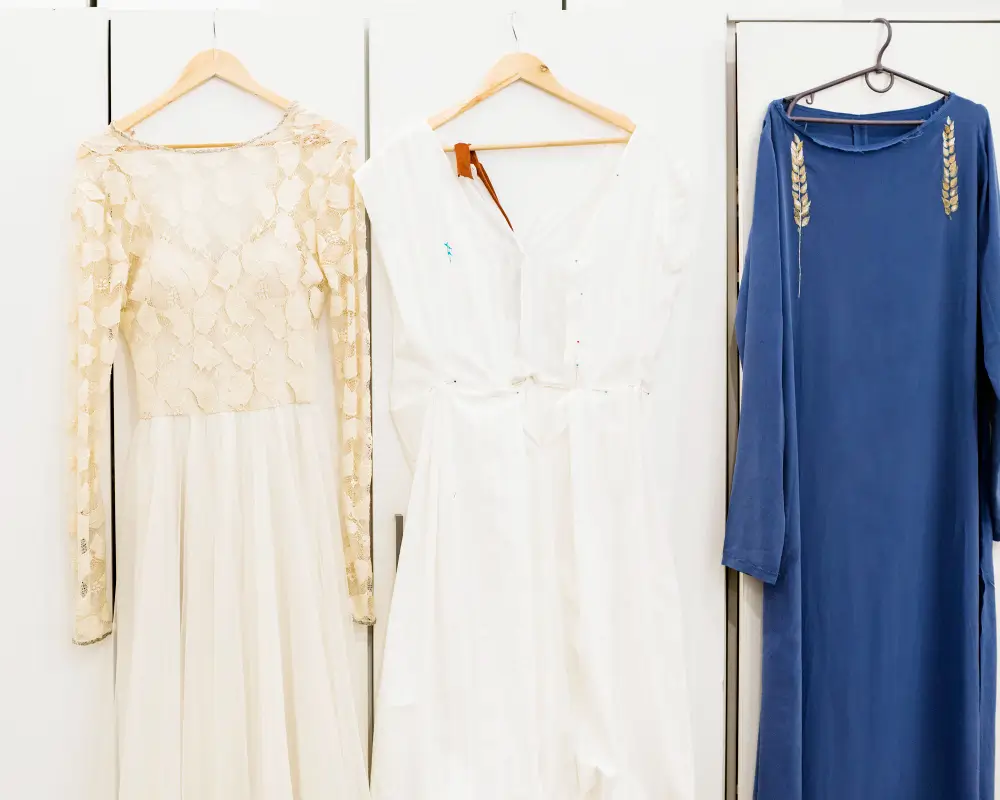
Long-term preservation protects your gown from damage that may not show immediately. Fabric aging happens slowly, and improper preservation techniques can accelerate it. Improper wedding gown storage can cause yellowing, odor buildup, and fiber breakdown years later.
Wedding gowns often include invisible stains from sweat, perfume, champagne, or sugar. These stains darken as time passes. Heat, moisture, and light exposure also accelerate deterioration. Mold and mildew thrive in humid conditions and can permanently ruin delicate fabric.
A preserved gown becomes a physical memory. Many families pass wedding dresses from mother to daughter, turning one gown into generations of stories. Correct storage methods protect both its beauty and its meaning.
The Emotional and Financial Value of Your Gown
A wedding gown holds deep sentimental value. It marks a life milestone filled with emotion, celebration, and tradition. Over time, it may become a family keepsake that connects generations.
Many gowns also have high financial value. Custom designs, luxury fabrics, and handcrafted details increase replacement cost. Proper wedding gown preservation protects that investment. Professional care helps preserve bridal gowns and keeps them suitable for future use or display.
Risks of Improper Storage
Poor storage can cause serious damage to your gown over time. Fabrics react with light, air, and acids, which leads to yellowing and discoloration. Plastic or non-breathable bags trap moisture, encouraging mildew and unpleasant odors.
Folding the gown without proper support can create deep creases and weaken delicate fibers, while beadwork and lace may loosen or tear. Without careful bridal dress preservation, these issues become permanent, leaving the fabric brittle and fragile.
Preparing Your Wedding Gown for Storage
Preparation is the foundation of successful wedding gown storage. Before placing your gown into storage, it must be cleaned, inspected, and handled carefully. Skipping these steps allows stains and damage to worsen over time.
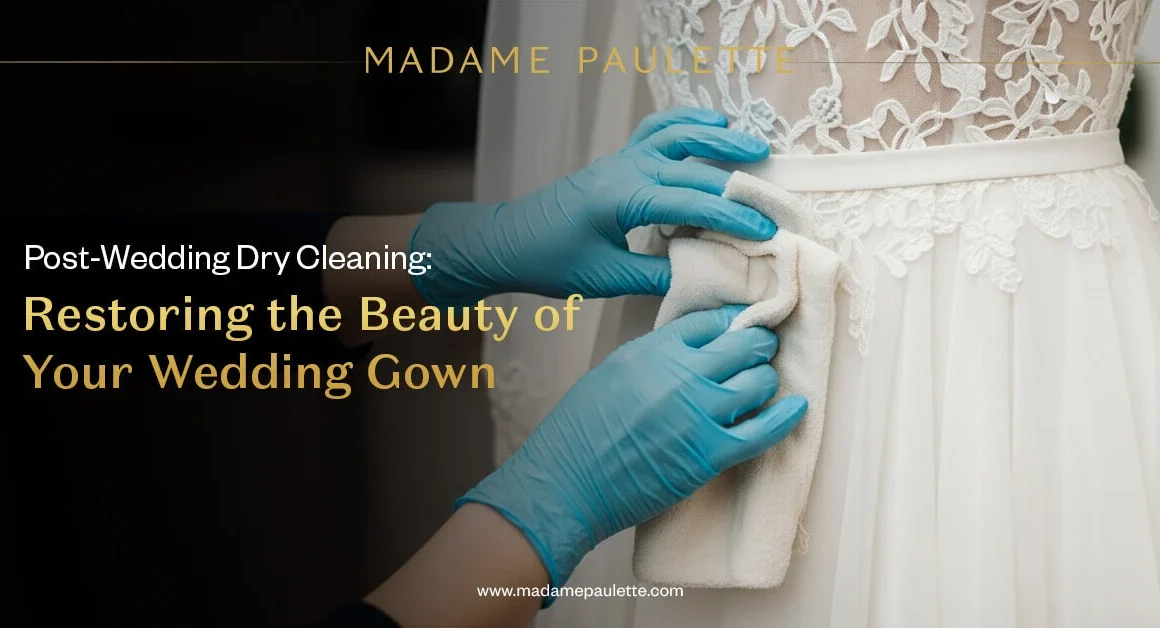
Expert wedding dress cleaning and storage removes hidden stains while protecting the gown during long-term preservation.
Professional Cleaning Is Essential
Professional cleaning removes invisible stains that cause fabric aging. Sugars and oils oxidize over time and permanently darken. Only expert wedding dress cleaning and storage methods can safely treat delicate materials efficiently.
Specialists know how to clean silk, lace, tulle, and embellishments. This step supports long-term preservation of your wedding dress goals. Professional treatment also prepares the gown for archival storage.
Inspection and Minor Repairs
Inspection identifies small issues before storage begins. Loose beads, weak seams, and small tears should be repaired early. Early care is key if you want to preserve your wedding dress for future generations. Ignoring minor damage leads to larger problems later.
Professionals trained in wedding dress cleaning preservation check each layer and detail. These careful steps protect the gown’s structure during storage and handling.
Choosing the Right Storage Materials
Materials used for wedding gown storage directly affect how the gown ages. Low-quality materials introduce acids and moisture that harm fabric. High-quality materials shield the gown from light, dust, and humidity. They also allow air circulation, which slows fabric degradation.
The Importance of Archival-Quality Materials
Archival storage materials are designed to protect delicate wedding gowns over long periods of time. Acid-free and breathable materials prevent harmful chemical reactions that can cause fabric discoloration. Acid-free tissue paper cushions folds, reduces fabric stress, and helps maintain the gown’s original shape.
Preservation boxes shield the dress from light exposure, dust, and environmental pollutants that accelerate aging. Using these materials plays a vital role in long-term wedding dress preservation, especially for gowns with intricate embroidery, lace, or beadwork.
Avoiding Plastic and Non-Breathable Bags
Plastic bags trap moisture, leading to condensation. This environment promotes the growth of mildew and fabric odor. Over time, plastic releases chemicals that damage fibers. Non-breathable materials limit airflow and accelerate fabric aging. For proper wedding gown storage, breathable preservation materials are essential.
Storing Your Wedding Gown
There are two common storage methods: folding and hanging. Each method has benefits based on gown style, weight, and fabric type.
Choosing the right method protects the gown’s structure and prevents stress on seams and embellishments. Professional bridal dress preservation helps protect delicate fabrics from yellowing and long-term damage.
The Best Way to Fold Your Gown
Folding is the best method for heavily beaded or structured gowns that could be damaged by hanging. Start by laying the gown flat on a clean, smooth surface to prevent dirt or snags. Use acid-free tissue paper between each fold to cushion delicate areas and reduce pressure on seams and embellishments.
Gently support the bodice, sleeves, and train with extra tissue to avoid deep creases and maintain the gown’s shape. This careful method protects the fabric, preserves its structure, and ensures long-term wedding gown storage without damage.
When Hanging Is the Best Option
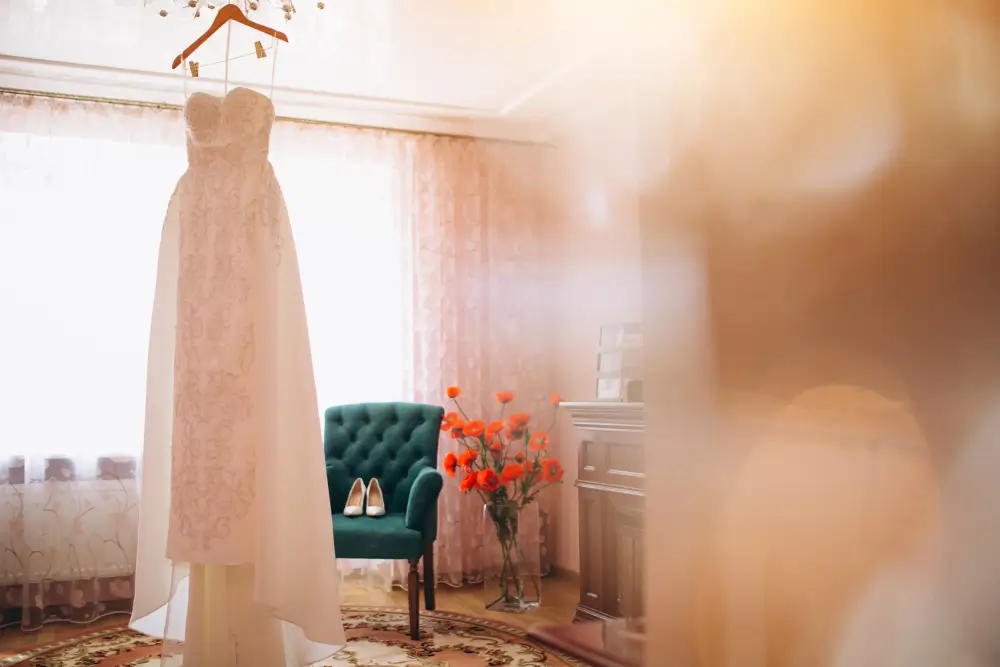
Hanging is best for lightweight gowns with minimal embellishments, such as chiffon or organza dresses, where folding could create unnecessary creases. Always use wide, padded hangers to support the gown evenly and prevent the shoulders or bodice from stretching.
Never hang the gown by thin straps alone, as this can pull and distort the fabric over time. For added support, tuck soft fabric rolls or extra tissue into sleeves, bodices, and delicate areas to reduce stress on seams. Even when hung, the gown should be kept in a climate-controlled environment to protect it from humidity, heat, and sunlight, ensuring long-term preservation.
Where to Store Your Wedding Gown
Location matters as much as materials. An improper environment can damage even well-packed gowns. Wedding gown storage should always happen in stable conditions.
Fluctuating heat can weaken fibers, while excess moisture encourages mildew and fabric breakdown. Consistent, controlled conditions slow aging and help preserve the gown’s color, structure, and delicate details over time.
Ideal Locations for Storing Your Gown
Avoid storing your gown in attics or basements. These areas often experience extreme temperature fluctuations, which can weaken delicate fabrics such as silk, lace, or tulle over time. Basements are prone to humidity and occasional leaks, which encourage mold, mildew, and permanent staining.
Attics may expose your gown to sunlight, causing fading, yellowing, and fabric degradation. A dark, dry closet inside your home is ideal, offering stable temperatures, low humidity, and protection from light, while making it easy to check and maintain your gown periodically.
Climate-Controlled Storage is Key
Climate-controlled environments slow chemical reactions that break down fabric. Stable temperature and humidity protect color and texture. Professionally preserved gowns stored in climate-controlled closets stay in better condition for decades. Many families seeking wedding dress preservation near me choose professional storage for this reason.
Ongoing Care and Maintenance for Your Wedding Gown
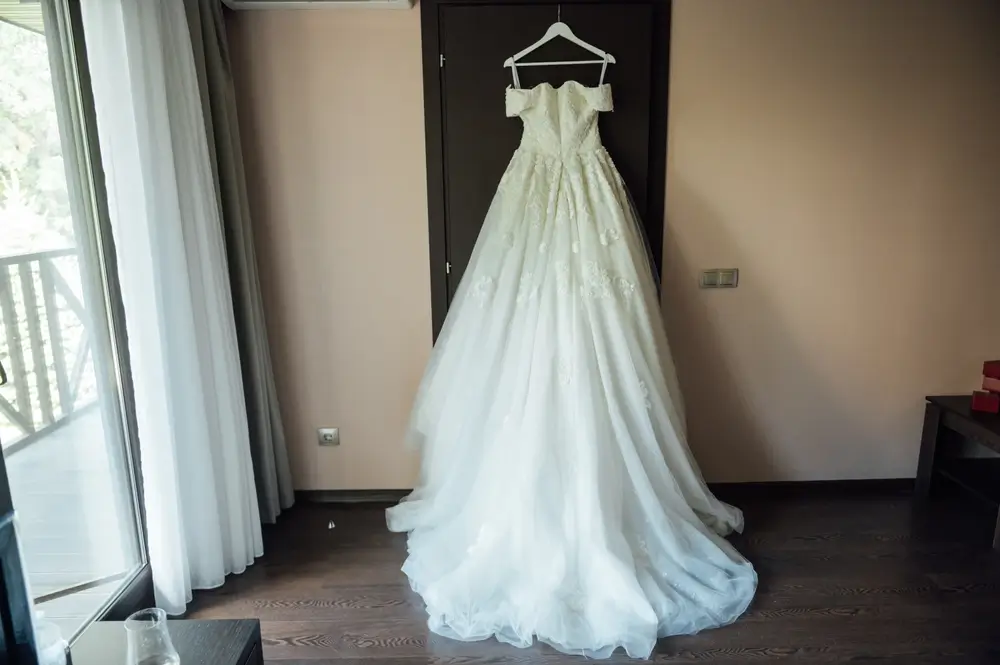
Even with proper wedding gown storage, gowns benefit from periodic checks. Inspect the gown every year. Look for discoloration or moisture. Reposition folds to reduce long-term stress. Replace tissue paper as needed. Avoid frequent touching, which transfers oils to fabric. Gentle maintenance supports long-term bridal gown preservation and protects the gown’s integrity.
Professional Wedding Gown Preservation Services
Professional services provide expertise beyond home storage options. Specialists use museum-quality materials and controlled environments.
Services like Atelier Wedding Gown Restoration focus on luxury gowns with complex construction. Preservation professionals understand couture fabrics, such as a Chanel Wedding Gown, and handle them with precision.
Many also offer consultations on gown alterations after the wedding dress fitting and on long-term care planning. Experts support reliable wedding dress preservation results and lasting beauty.
FAQs – Wedding Gown Storage
What’s the best way to store a wedding gown?
The best method involves professional cleaning, acid-free materials, and climate-controlled wedding gown storage. Folding gowns in tissue paper and placing them in a preservation box works well for most gowns.
Where do people keep their wedding dresses?
Most people store gowns in interior closets away from light and moisture. Professional facilities are also common for long-term bridal gown preservation.
Is it better to store a wedding dress hanging or flat?
Flat storage suits heavier gowns. Hanging works for lightweight designs with proper support. The choice depends on fabric and structure.
Conclusion
Protecting your gown protects your story. Proper wedding gown storage prevents damage, preserves color, and maintains fabric strength for decades. Professional cleaning, careful inspection, archival materials, and climate control all play vital roles in long-term care.
Preservation is not just about fabric. It is about safeguarding memories for future generations. With expert guidance and thoughtful storage choices, your gown can remain a cherished heirloom. Investing in professional care and proven methods of wedding gown storage allows your wedding dress to live on as a symbol of love, history, and tradition.