Your wedding gown is more than just a piece of clothing. It is a masterpiece of design and a vessel for the most precious memories of your life. After months of searching and fittings, that gown represents an emotional and financial investment. However, once the celebrations end, the delicate fabrics and intricate details face a new challenge.
To protect this heirloom, post-wedding dry cleaning is the most important step a bride can take. This process is not about basic maintenance. It is about honoring the craftsmanship and sentimental value of a once-in-a-lifetime garment.
For over half a century, Madame Paulette has stood as the world’s leading specialist in cleaning and restoration. Trusted by global couture houses, prestigious museums, and celebrities, we understand the physics of fine textiles. Your gown deserves the same level of luxury wedding dress care that high-fashion icons rely on daily.
Whether your dress features French lace, hand-sewn crystals, or heavy silk satin, expert intervention is required. Professional wedding dress cleaning ensures that the beauty you felt on your wedding day remains intact for decades to come. Trusting a leader like Madame Paulette means choosing perfection for your most cherished garment.

Why Post-Wedding Dry Cleaning Is Essential for Your Wedding Gown
Many brides look at their gown the morning after and think it looks clean. This is a dangerous misconception. Wedding dress cleaning is never optional if you intend to keep the garment preserved for longer. Even if you did not spill wine or trip on the dance floor, your dress has encountered various elements.
Invisible Stains
The most high-risk threats are often invisible. Spilled champagne, clear soda, or cake frosting contains sugars that dry clear. Over time, these sugars undergo a chemical reaction called oxidation. This turns the spots into dark brown or yellow stains that are nearly impossible to remove later. Similarly, perspiration, perfume, and body oils react with the air. These substances weaken the silk fibers and cause permanent discoloration.
Ground-in Dirt
The hem of your gown acts like a mop as you move. It picks up dirt, asphalt oils, and microscopic debris from the floor. If left untreated, these particles can grind into the fabric’s weave. This causes “graying” of the hemline.
Why Speed Matters
Untreated stains can become permanent within a few short weeks. The longer a stain sits, the more it bonds with the delicate threads. Professional post-wedding dry cleaning stops this bonding process. It neutralizes acids and removes oils before they can erode the gown’s structure if done at the right time, that is, immediately after the wedding.
What Happens to a Wedding Dress After the Big Day
A wedding is a high-energy event. Your dress endures hours of movement, heat, and exposure to the environment. While you were making memories, your gown was absorbing the environment.
Common Post-Wedding Stains & Damage
- Beverage Splashes: Wine, cocktails, and sugary drinks are common culprits.
- Beauty Products: Makeup, self-tanner, and deodorant leave waxy residues.
- Outdoor Elements: Grass stains, pavement dust, and street grime settle on the train.
- Body Chemistry: Sweat and humidity can cause the bodice to stiffen or yellow.
- Physical Wear: Loose beading, lace snags, and torn hems from dancing or walking.
Why Some Damage Isn’t Visible Right Away
As mentioned, oxidation is a slow process. A gown stored in a closet without wedding dress dry cleaning might look white today, but yellow by your first anniversary. Furthermore, the stress on the seams and the weight of heavy beadwork can distort the shape of the dress if not addressed by a specialist.
Why You Should Never Attempt DIY Cleaning at Home
It is tempting to try a quick fix on a small spot. However, home remedies are the leading cause of ruined couture. Professional wedding dress dry cleaning uses specific chemistry that your laundry room lacks.
What NOT to Do
- Avoid Water and Bleach: Water can cause silk to ripple or form a “water spot.” Bleach can dissolve natural fibers, such as silk.
- No Aggressive Rubbing: Rubbing a stain breaks the fibers, creating a “fuzzy” patch that becomes difficult to fix.
- No Plastic Bags: Never store your gown in a plastic dry-cleaning bag. Plastic emits gases that cause yellowing and trap moisture, leading to mold.
- Avoid Hanging: Heavy gowns should not hang for long periods. The weight of the skirt will stretch the shoulder straps and distort the bodice.
What You CAN Do Immediately
If you cannot get to a specialist right away, simply air-dry the gown in a cool, dark room. Keep it out of direct sunlight to prevent fading. You may wrap it loosely in a clean, white cotton sheet. Your next step should be to schedule a professional evaluation for VIP garment care for couture immediately.
Why Wedding Gowns Require a Specialized Dry Cleaning Expert
A standard neighborhood dry cleaner is not equipped for a wedding gown. They often use bulk machines that can crush delicate beads or melt sequins. Post-wedding dry cleaning at a specialist level is a completely different craft.
How Wedding Dress Dry Cleaning Is Different
Wedding gowns often combine five or six different types of fabric. They feature lace, tulle, silk, and synthetic linings. Each reacts differently to heat and solvents. A specialist uses:
- Individual Stain Mapping: Every square inch is inspected by hand.
- Specialty Solvents: Gentle, eco-friendly fluids that protect beadwork.
- Manual Techniques: They are not just “tossed it in the machine.” Many parts are cleaned by hand.
What to Look for in a Wedding Gown Specialist
You need more than a cleaner; you need a textile conservator. Look for someone with a history of handling high-end designers. They should offer professional wedding dress cleaning that includes a detailed fabric analysis before any liquid touches the garment. This is why Madame Paulette remains the gold standard.
Madame Paulette’s Couture-Level Wedding Gown Cleaning Process
At Madame Paulette, we treat every gown like a work of art. Our process for wedding gown preservation and cleaning is meticulous. We follow a strict protocol to achieve the best results.
Initial Gown Inspection & Stain Mapping
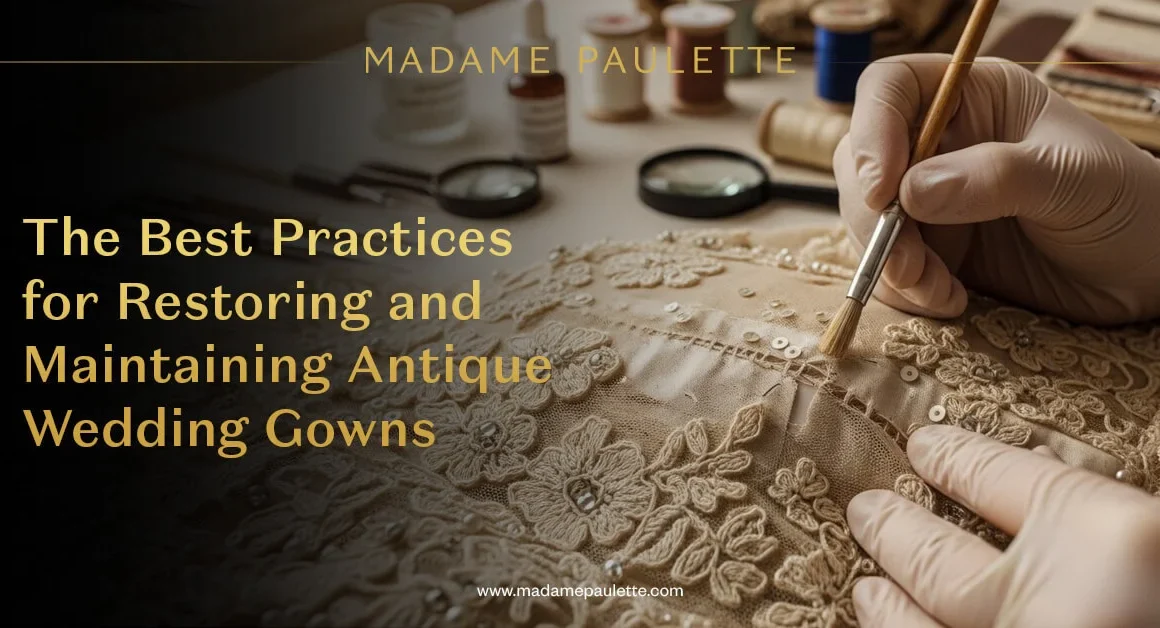
The process begins with a high-intensity light inspection. Our specialists look for the “invisible” sugar stains and microscopic damage. We create a map of the gown to ensure every area is addressed.
Custom Cleaning & Restoration Treatment
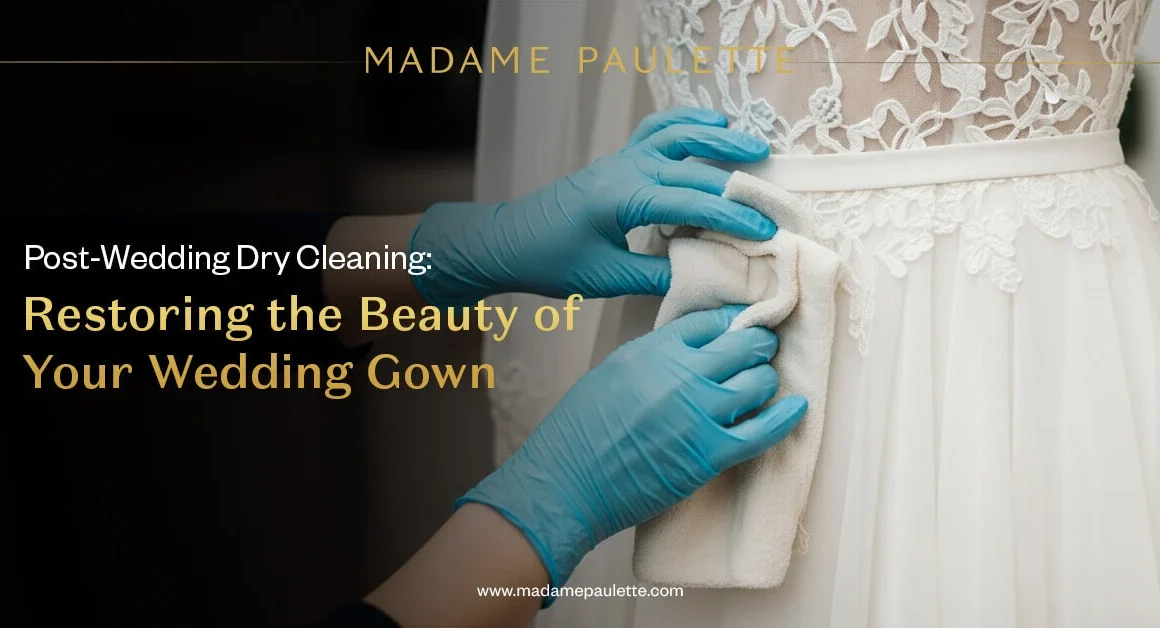
We do not use a “one size fits all” method. We tailor the cleaning solution to your specific fabric. Our artisans hand-clean delicate lace and protect every piece of embroidery. This wedding dress cleaning and preservation mindset starts from the first soak.
Final Finishing & Quality Control
Once clean, the gown is hand-pressed. We use specialized forms to maintain the bodice’s original silhouette. A senior specialist performs a final check to ensure the gown looks as it did on the designer’s showroom floor.
Cleaning vs. Preservation: What’s the Difference?
Many brides use these terms interchangeably, but they serve different goals. Understanding the difference helps you choose the right service.
Wedding Dress Dry Cleaning
Wedding dress dry cleaning focuses on the immediate removal of all soils and surface stains.
- Removes stains and soils: Effectively eliminates champagne, dirt, and oils.
- Ideal for active use: Best if the gown is reworn, altered, or sold.
- Short-term care: A vital solution for immediate fabric safety.
Wedding Gown Preservation
Wedding dress cleaning and preservation is a specialized archival process for long-term storage.
- Archival storage: Uses museum-quality techniques to prevent aging.
- Acid-free materials: Includes wedding dress cleaning and boxing in pH-neutral environments.
- Sentimental keepsakes: Best for heirloom gowns intended for future generations.
When Should You Clean Your Wedding Gown?
Timing is everything in post-wedding dry cleaning. The window of opportunity for perfect restoration is smaller than you think.
- Ideal Timeframe: Within days of the wedding. If you are going on a honeymoon, have a friend or family member drop it off.
- The Risk of Waiting: After six months, many stains become a part of the fabric. The success rate for total removal drops significantly.
- Restoration Success: Early cleaning makes the process less invasive and more effective
How to Safely Transport Your Wedding Gown
Getting your gown to the specialist requires care. If you are looking for wedding dress preservation near me, you may drive or ship the garment if it is far. Whichever you do, follow these tips to make it safely reach the destination.
- Use Breathable Materials: Use a wide, breathable cotton garment bag.
- Avoid Sharp Folds: Do not fold the gown tightly. This can crack delicate internal stiffening or damage beads.
- Climate Control: Never leave the gown in a hot car. Heat accelerates the oxidation of stains.
- White-Glove Service: For the best experience, use a professional courier or the boutique’s own pickup service. This ensures the gown is handled by experts from door to door.
Why Brides Trust Madame Paulette With Their Wedding Gowns
With over 50 years of expertise, Madame Paulette has earned its reputation as the premier destination for wedding gown restoration & care. We do not just clean clothes; we preserve history.
Our team consists of the most skilled textile experts in the industry. Brides choose us because they want peace of mind. They know that our wedding dress cleaning and boxing process uses the finest acid-free materials available. We provide unmatched precision and discretion.

FAQs – Post-Wedding Dry Cleaning
How soon should I dry-clean my wedding gown after the wedding?
You should aim for post-wedding dry cleaning within two weeks. If you wait longer, perspiration and sugar stains begin to set. Early action increases the likelihood of a perfect restoration.
Can invisible stains really damage my wedding dress over time?
Yes. Stains from champagne or perfume contain sugars and acids. These substances caramelize over time. They turn yellow or brown and can eventually eat through the fibers, leaving holes in the silk.
Is wedding gown dry cleaning different from regular dry cleaning?
Absolutely. Regular cleaning uses harsh heat and bulk chemicals. Wedding dress dry cleaning involves manual stain removal, pH-balanced solvents, and specialized finishing tools to protect delicate couture elements.
Conclusion
Your wedding gown is a physical manifestation of your most beautiful day. It deserves the highest level of respect and technical skill. By choosing post-wedding dry cleaning, you prevent the inevitable decay caused by environmental exposure and time. Whether you plan to pass your dress down to a daughter or simply keep it as a private treasure, professional care is the only way to safeguard its future.
The artisans at Madame Paulette provide a comprehensive wedding dress cleaning and preservation service that meets museum standards. From the first inspection to the final wedding dress cleaning and boxing, every step is performed with the utmost precision. Do not leave your memories to chance with a standard cleaner. Invest in post-wedding dry cleaning to keep your gown as radiant as it was on your wedding day.