For many brides, the gown is the heart of the wedding day. It is often a masterpiece of artistry, featuring intricate threads and delicate patterns. However, the question of how to maintain such a garment causes significant anxiety.
You may wonder if it is possible to clean hand-embroidered wedding dresses without ruining the artistry. The fear of seeing a loose bead or a frayed silk thread is valid. Standard cleaners often lack the touch required for such high-stakes garments. This is where Madame Paulette’s expertise becomes essential.
With over 50 years of experience in couture conservation, we are not a typical laundry service. We are world-renowned authorities in textile restoration. We understand that your gown is an heirloom. Our process protects the fabric’s integrity and the labor-intensive embroidery. You can trust that your most precious garment is in the hands of specialists who treat fashion as art.
Why Hand-Embroidered Wedding Dresses Require Specialized Care
Hand-embroidered wedding dresses are not mass-produced items. They are the result of hundreds of hours of manual labor. A skilled artisan places every stitch. This creates a level of detail that machine processes cannot replicate. Because the construction is so specific, the cleaning process must be equally unique.
Standard industrial machines are designed for durability. They are built to handle bulk loads and sturdy fabrics. A couture gown has different needs. The tension of the hand-sewn threads varies across the bodice and skirt.
A single mistake in a cleaning vat can trigger a cascade of damage. Specialized care focuses on the garment’s individual needs rather than on a high-volume assembly line.
What Makes Hand Embroidery Extremely Delicate
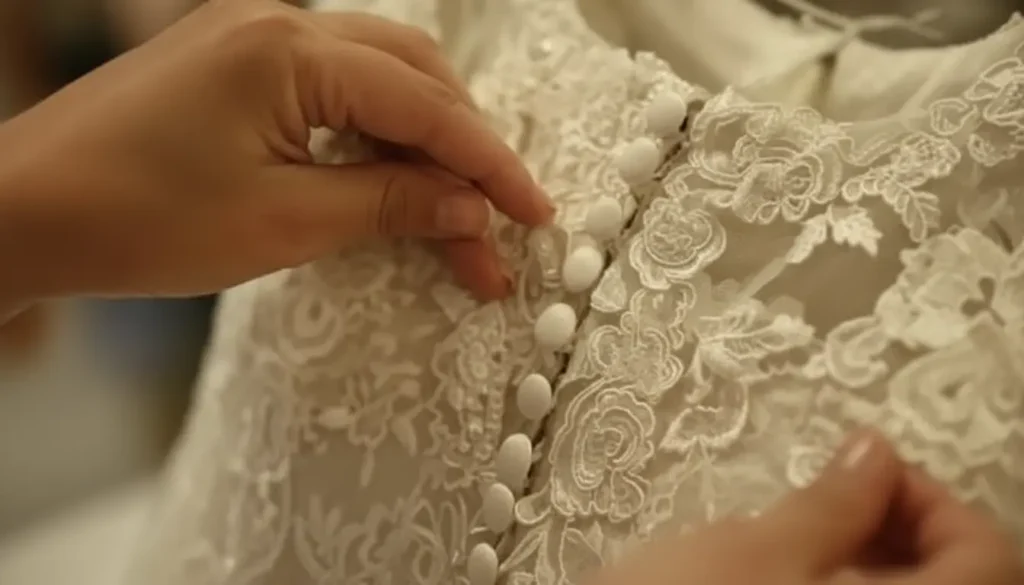
Hand embroidery is fundamentally different from machine work. In machine embroidery, the tension is uniform, and the knots are tight. In hand-embroidered wedding dresses, the artisan often uses varying pressures. This creates a three-dimensional effect that is stunning but fragile.
The threads are often caught in delicate loops on the underside of the fabric. If these loops snag, the entire pattern can begin to pull. Furthermore, handwork often involves mixed materials. An artist might use silk thread alongside metallic wire or glass beads.
Each of these components reacts differently to moisture and chemicals. This complexity makes the gown a “multi-material” challenge that requires a professional couture dry cleaner.
Fabrics Commonly Used in Hand-Embroidered Bridal Gowns
The “canvas” of the embroidery is just as important as the thread. High-end designers choose fabrics that drape beautifully but are notoriously difficult to clean.
- Silk Charmeuse, Silk Satin, and Silk Tulle: These are the royalty of bridal fabrics. Silk charmeuse has a liquid-like sheen that is easily dulled by improper solvents. Silk tulle is incredibly airy; the weight of heavy embroidery can actually tear the mesh if not supported properly during luxury wedding dress cleaning.
- Organza and Chiffon: These sheer fabrics provide a light base for floral embroidered wedding dress designs. However, they are prone to “shifting” or distorting when wet.
- Antique Lace: Many brides incorporate family lace into their gowns. These fibers are often brittle. They require a gentle touch to prevent crumbling during the bridal gown cleaning process.
- Mixed-Media Couture Fabrics: Modern designers often blend synthetic and natural fibers. This creates a unique texture but complicates the chemical reaction during the cleaning process.
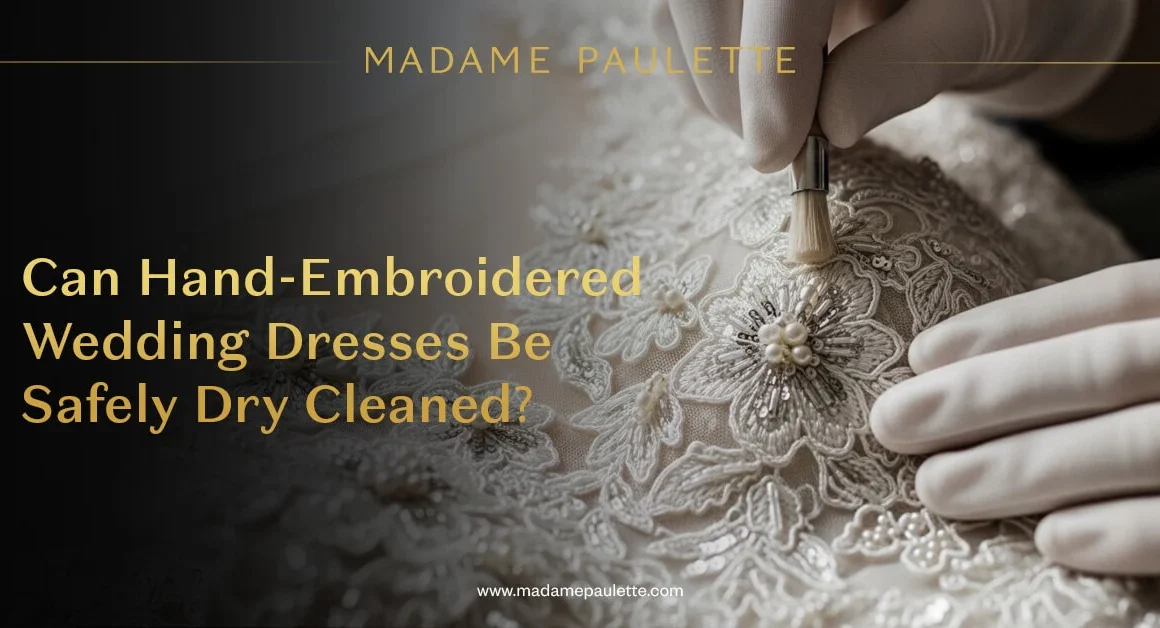
Can Hand-Embroidered Wedding Dresses Be Dry Cleaned Safely?
The short answer is yes, but the method is everything. You should not look for a simple “yes” or “no” when choosing a cleaner. The term “dry cleaning” is a broad category. It covers everything from a local shop to a high-end lab. For hand-embroidered wedding dresses, the specific solvent and the mechanical action are the deciding factors.
If a cleaner uses a “one-size-fits-all” approach, the risk is high. If they use a customized, non-toxic, and gentle solvent, the process is safe. It is more accurate to call the necessary process “couture conservation.” This involves a blend of hand-cleaning and very controlled solvent application. The goal is to remove oils and stains without compromising the embroidery’s physical structure.
Why Standard Dry Cleaning Can Be Dangerous
A typical wedding dress dry cleaning service at a neighborhood shop can be a recipe for disaster. Most shops use a solvent called perchloroethylene. This chemical is very effective at removing grease, but it is too harsh for delicate bridal silks. It can strip silk of its natural oils, leaving it feeling “crunchy” or brittle.
Another danger is full immersion. Standard cleaners put the entire dress into a large rotating drum. As the drum spins, the weight of the wet dress creates a massive centrifugal force. This force pulls on the hand-stitched beads. It can snap the fine silk threads that hold the embroidery in place.
Furthermore, the mechanical tumbling action causes the embellishments to rub against each other. This friction can lead to scratches on beads or pilling on the fabric. Finally, the high heat in standard drying cycles can melt certain sequin types or the glue used in couture work.
The Biggest Risks When Cleaning Hand-Embroidered Wedding Dresses
Understanding the specific risks helps you ask the right questions when looking for dry cleaning in NYC.
Solvent Sensitivity
Many dyes used in hand-dyed embroidery threads are not “colorfast.” This means they can bleed when they come into contact with certain chemicals. A red floral detail might bleed into the white silk base. Additionally, metallic threads—often used in luxury wedding suits and couture gowns—can tarnish. If the wrong solvent is used, gold or silver threads may turn black or green due to oxidation.
Structural Damage to Embellishments
Beads and sequins are often the first things to fail. Some beads are “surface-dyed,” meaning the color is just a thin coating. Cheap solvents can strip this color away. Furthermore, if the thread knots are not reinforced, the agitation of a machine will cause them to unravel. This results in a “pearl drop” effect, where beads fall from the dress in a trail.
Fabric Distortion and Shrinkage
The embroidery thread and the base fabric are rarely the same material. If the dress gets too hot or too wet, the silk base might shrink while the embroidery stays the same size. This causes the fabric to pucker or “bubble” around the design. The sheer weight of a heavily floral embroidered wedding dress can also cause it to stretch out of shape if it is hung up while wet.
How Madame Paulette Safely Cleans Hand-Embroidered Wedding Dresses
At Madame Paulette, we treat every gown as a unique project. Our reputation for couture dress cleaning is built on a foundation of science and art. We do not simply “run a load.” We analyze the garment’s molecular makeup.
Couture-Level Inspection and Fiber Testing
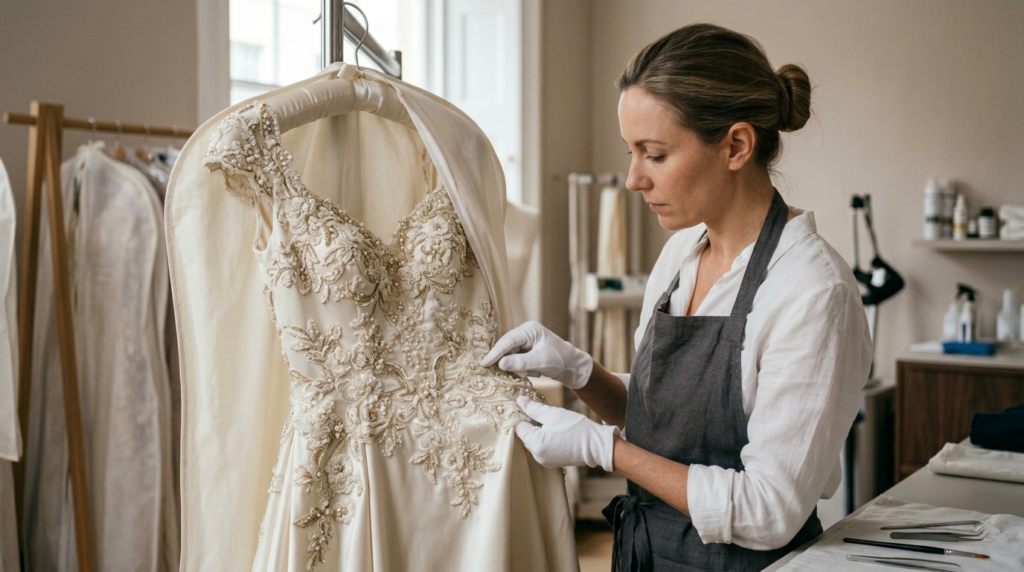
Before any cleaning agent is applied to the fabric, we conduct a thorough analysis. We identify every fiber in the dress. We test the embroidery threads for colorfastness in hidden areas. Our experts assess the original construction’s strength. If we find loose threads, we secure them before cleaning begins. This assessment ensures that the designer’s wedding dress cleaning process is mapped out before it starts.
Customized, Non-Aggressive Cleaning Methods
We do not use a standard price list because we do not use a standard method. Some hand-embroidered wedding dresses require 90% hand-cleaning. We use soft brushes and specialized tools to lift stains from the underarms or hemline.
If solvent is needed, we use a controlled environment. We avoid unnecessary immersion. Our process does not use mechanical agitation for delicate items. We use an air-drying method that prevents heat damage and fabric stress. This level of VIP garment care is why we are the top choice for museums.
Dry Cleaning vs. Hand Cleaning for Embroidered Bridal Gowns
It is important to understand the difference. Hand cleaning involves a technician using specialized solutions and sponges to target specific spots. It is the safest method for an embroidered bridesmaid dress or a bridal gown with heavy crystal work. Dry cleaning uses a liquid solvent (with almost no water) to clean the entire garment.
The best approach is often a hybrid. A professional dry cleaner for couture will hand-clean the most sensitive areas first. They might then use a brief, gentle “bath” in a high-grade solvent to refresh the remaining fabric. This ensures the dress is clean inside and out, without the risks associated with a standard machine cycle.
What Brides Should Do Before Bringing an Embroidered Dress for Cleaning
Preparation is key to a successful bridal gown cleaning experience. First, always keep your dress in a breathable garment bag. Plastic bags trap moisture and can cause yellowing or mildew. If your dress is heavily embroidered, do not hang it by the thin shoulder straps. Use the interior ribbons designed to take the weight.
Avoid folding the embellished areas tightly. This can create permanent creases in the fabric or snap the embroidery threads. If you spill something on the day of the wedding, do not rub it with a napkin. Gently blot the liquid and leave it alone. Rubbing can push the stain deeper into the weave of the hand-embroidered wedding dresses and damage the delicate surface fibers.
Long-Term Preservation of Hand-Embroidered Wedding Dresses
Cleaning is only the first step. To keep the dress perfect for decades, you must consider preservation. A clean dress can still turn yellow over time if exposed to oxygen and light.
Why Preservation Matters After Cleaning
Preservation involves placing the cleaned dress in an acid-free environment. This prevents the “yellowing” effect that ruins many vintage gowns. It also protects the embroidery threads from becoming brittle.
When you invest in luxury wedding dress cleaning, you are protecting a financial and emotional asset. Proper preservation maintains the heirloom value. This allows a future daughter or granddaughter to wear the gown without it falling apart.
Why Brides Trust Madame Paulette With Couture Wedding Dresses
Madame Paulette has earned our recognition as an industry leader through decades of consistency. For over 50 years, we have handled the most complex garments in the world. We are the trusted partners for major fashion houses and celebrity stylists. When a floral embroidered wedding dress needs care, the industry looks to us.
Our specialization in vintage and heirloom garments means we understand old-world techniques. We handle 100-year-old lace as well as modern 3D-printed embellishments. Choosing us means you are choosing peace of mind. Your gown will return to you in the same beautiful condition it was in when you walked down the aisle.
FAQs – Hand Embroidered Wedding Dresses
Can beaded wedding dresses be dry cleaned?
Yes, beaded gowns can be cleaned, but the process must be gentle and avoid mechanical agitation to prevent the beads from cracking or detaching.
Is dry cleaning safe for silk embroidered gowns?
It is safe only if the cleaner uses silk-friendly solvents and avoids high heat, as silk is very sensitive to chemical stripping and thermal damage.
How soon after the wedding should I clean my dress?
You should have your dress cleaned within six months to prevent sweat and sugar stains from oxidizing and turning yellow.
Final Thoughts
Your wedding dress is a physical memory of a life-changing event. When it comes to hand-embroidered wedding dresses, the stakes are high. You should never settle for a “standard” clean. High-quality wedding dress dry cleaning is an investment in your garment’s longevity.
There is no risk when you choose a provider with the right credentials. By selecting a specialist like Madame Paulette, you ensure that every bead, thread, and silk fiber is respected. We provide the expertise needed to navigate the complexities of couture fabrics and delicate handwork.
Whether you have a modern embroidered bridesmaid dress or a custom bridal masterpiece, we provide the ultimate care. We invite you to experience the difference that 50 years of passion and precision can make. Your gown deserves nothing less than the gold standard of textile conservation.